Beauty Guides / Facial tools and rituals
Real jade: nephrite, jadeite and common look-alikes
Jade is two different minerals, and many tools sold as jade are something else. How to tell, what to ask sellers and why it matters.
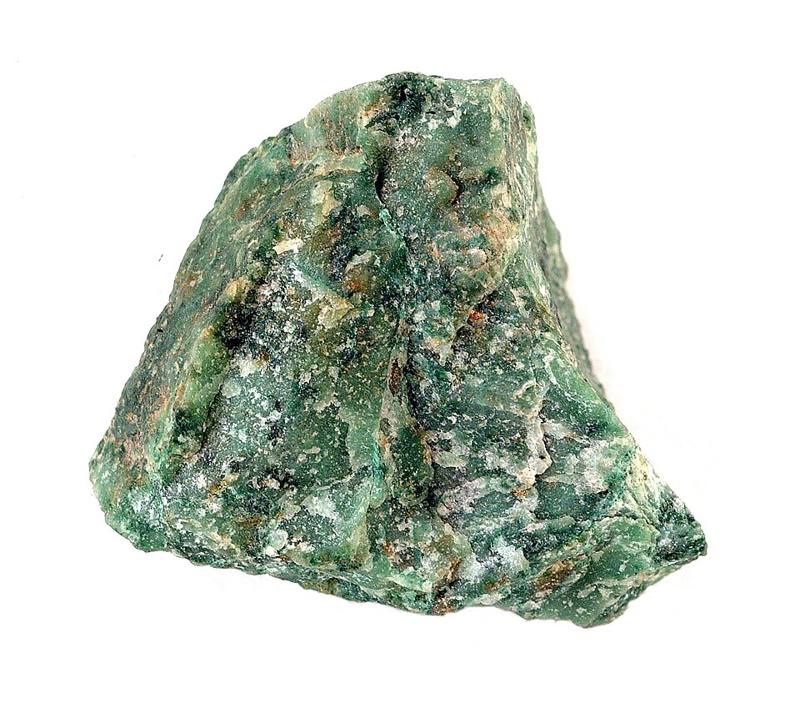
"Jade" is not one stone. Gemologists use the word for two different minerals that look and feel similar: nephrite and jadeite. On top of that, many cheaper stones are sold as "jade" with an adjective in front. Here is how to know what you are buying.
The two true jades
| Nephrite | Jadeite | |
|---|---|---|
| Mineral family | Amphibole (tremolite to actinolite) | Pyroxene |
| Mohs hardness | About 6 to 6.5 | About 6.5 to 7 |
| Density (specific gravity) | About 2.9 to 3.1 | About 3.3 to 3.4 |
| Structure | Interlocking fibers, very tough | Interlocking grains |
| Look | Often a soft, oily or waxy luster; spinach to creamy white | Can be glassy and translucent; vivid greens, lavender, white |
| Typical use | Carvings, bangles, beauty tools | Fine jewelry; top grades are very costly |
Nephrite is the jade of much of China's ancient carving tradition, and it is the stone most often used for genuine jade gua sha tools and rollers. It is exceptionally tough because its fibers interlock, which is why carvings and tools rarely chip under normal use.
Common look-alikes
Many "jade" tools are other stones. They can still be pleasant to use, but should be labeled honestly.
- Serpentine (often sold as "new jade" or "Korean jade"): softer, around 3 to 5 on the Mohs scale, can scratch more easily.
- Green aventurine (sometimes "Indian jade"): a quartz with sparkly inclusions.
- Dyed quartzite or dyed marble: color may look too uniform or collect in cracks.
- Glass: may show tiny round bubbles and feels warmer.
- Resin or plastic: light, warm to the touch and scratches easily.
Quick checks at home
None of these is a lab test, but together they give clues:
- Weight. Real jade feels heavier than you expect for its size. Plastic and resin feel light.
- Temperature. Jade feels cool and warms slowly in your hand.
- Look closely. Bubbles suggest glass. Color concentrated in cracks suggests dye. Sparkly flecks suggest aventurine.
- Tap gently. Two pieces of true jade tapped lightly together often give a clear ring; resin sounds dull. Do this carefully.
- Ask the seller. A trustworthy seller will name the exact stone (for example, "nephrite jade") and where it came from.
Avoid scratch tests on tools you want to use on your face. A chip or scratch creates a rough edge that can irritate skin.
Treated jade
Jadeite in the trade is often described in grades: A (natural, only surface waxed), B (bleached and filled with polymer) and C (dyed), with B+C meaning both. Treatments are not dangerous for occasional handling, but they affect value and durability. A gem lab can test expensive pieces.
Does the stone change results?
For facial massage, the stone's job is to be smooth, cool and comfortable. There is no good evidence that one mineral has special skin powers over another. What matters more is a smooth polished edge, a comfortable shape and gentle technique. Choose jade because you love its feel, history and look, and know that you are buying a beautiful tool, not a medical device.
In many East Asian cultures jade has long symbolized purity and long life, which is part of why it was chosen for beauty rituals. The history of gua sha has more.